Terraforming Mars
By Artefacts Studio
Build a corporation's card engine while competing to make Mars habitable.
TAKE A CLOSER LOOK
Inside the game
THE QUICK INTRODUCTION
What’s it all about?
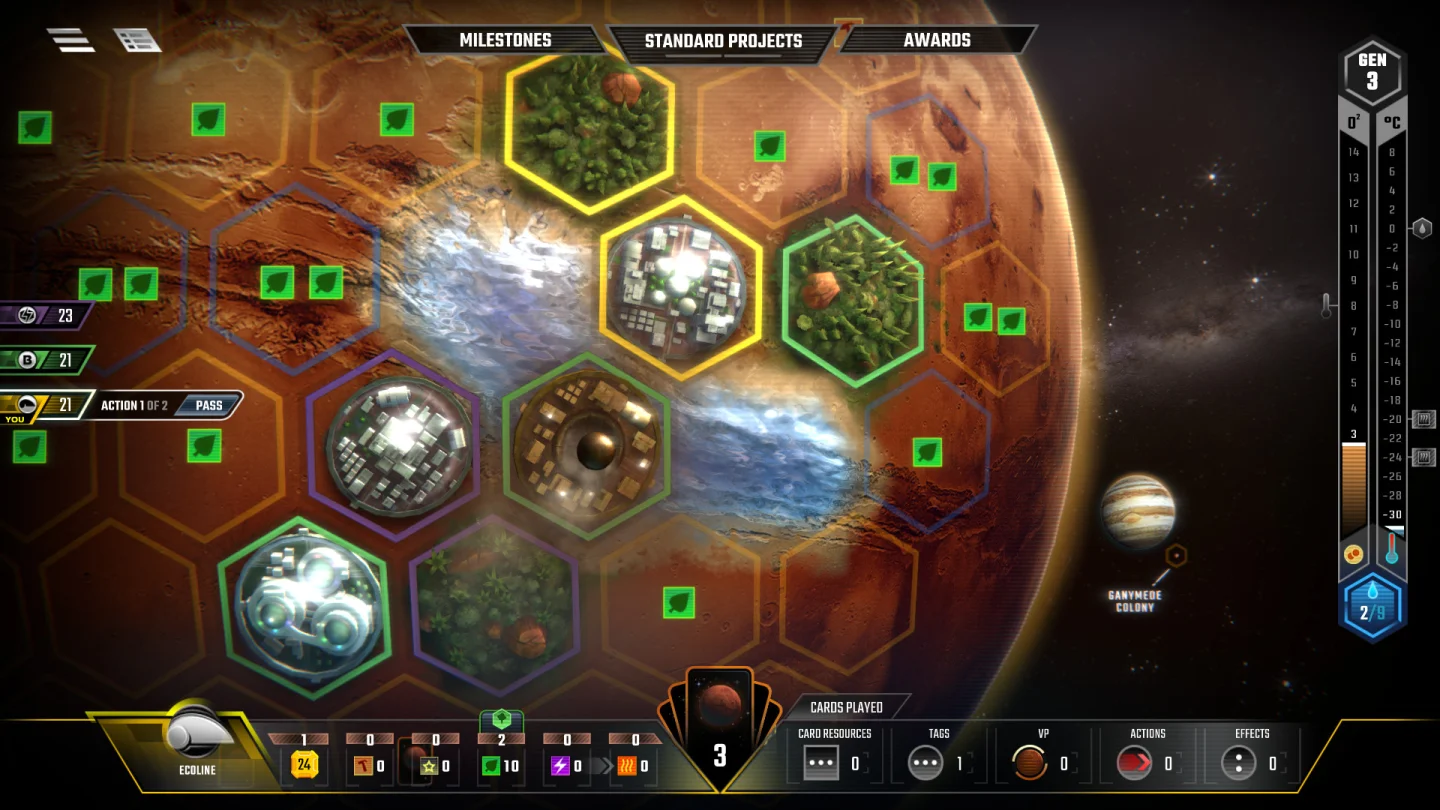
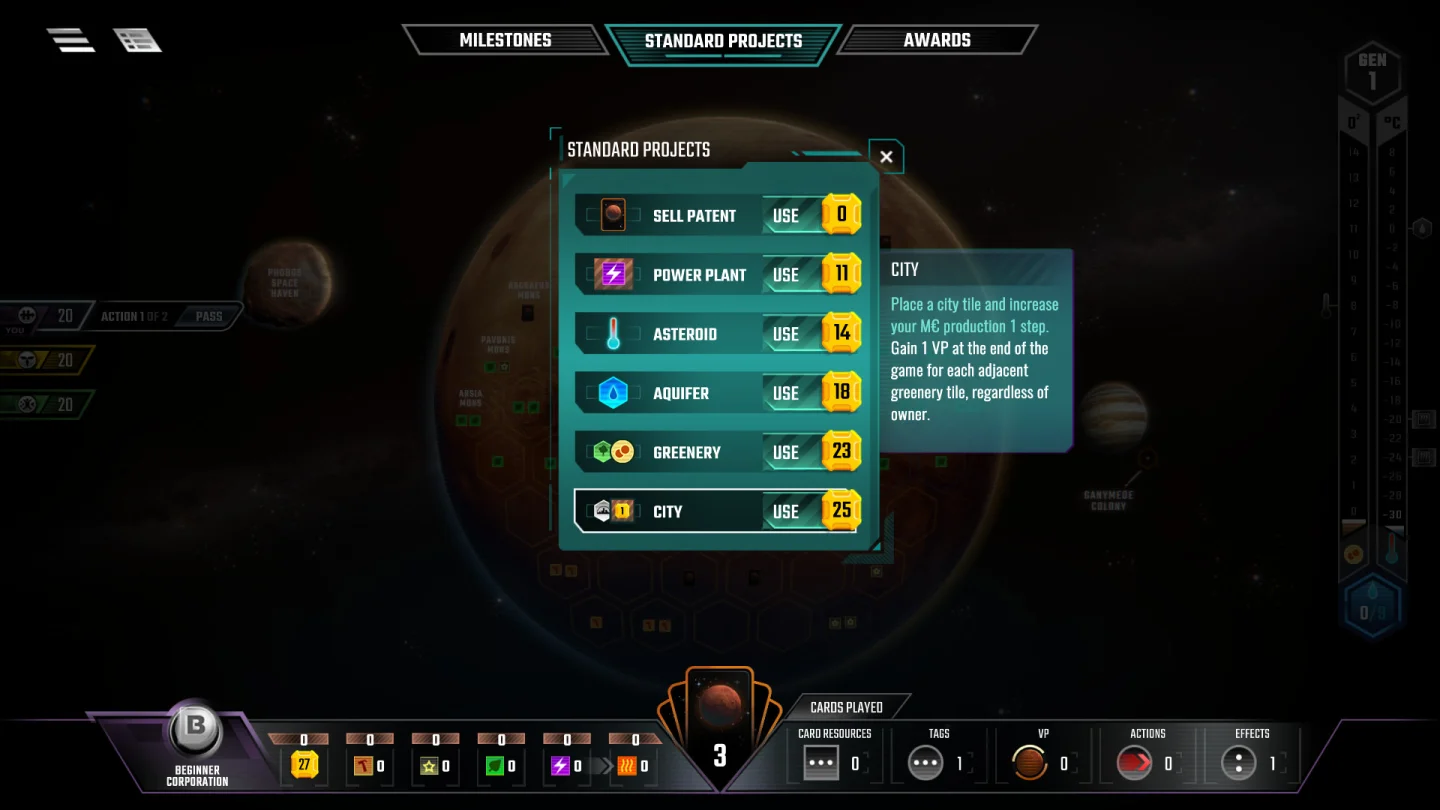
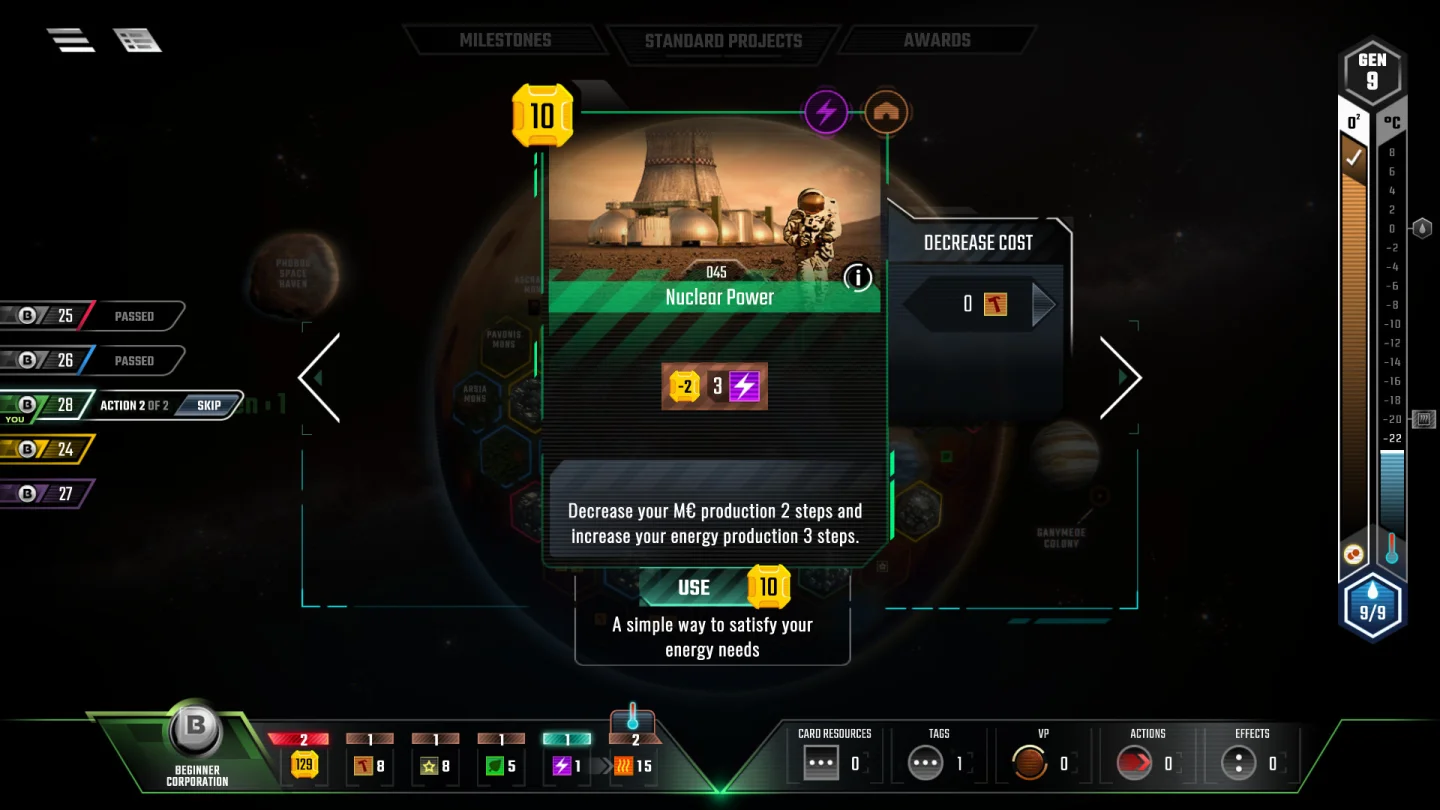
Terraforming Mars asks you to decide when an investment will pay for itself. A project may increase production for later generations, create a scoring opportunity or directly advance the planet’s transformation. Buying a card is therefore only the first commitment; playing it consumes resources that another project may need.
The digital adaptation takes care of repeated calculations, leaving room to compare timing and combinations. A clever engine still needs to produce points before the shared end conditions are reached. It suits players who enjoy evaluating a hand of possibilities and revising a plan as opponents change the board. Expansion cards and rules vary with the content purchased on each platform.
Release and platform details
Developer: Artefacts Studio. Publisher: Twin Sails Interactive. Steam edition release date: Oct 17, 2018. Desktop systems listed on Steam: Windows, macOS.
The digital board game has native Android and iOS releases. Expansions are separate purchases and should be checked on the platform where you intend to play.
Official sources
- Steam — current PC edition, developer, publisher, release and official media
- Google Play — native Android edition
- App Store — native iOS edition and device requirements
- Publisher — platform and edition information
Store information checked on 15 October 2026. Availability, device requirements and optional purchases can vary by region and platform.
Artwork and image credits
Image credit: Artefacts Studio / Twin Sails Interactive. The official cover and gallery images come from the developer/publisher’s Steam listing. Gallery images represent the PC store edition and may include promotional panels. Mobile editions may look different. Images belong to their respective owners.
Your kind of game if…
You enjoy card-driven economies and balancing future income against a shared finish line.
GET OFF TO A GOOD START
How to play
- Read the corporation ability before choosing which cards to keep.
- Separate long-term production from actions that score immediately.
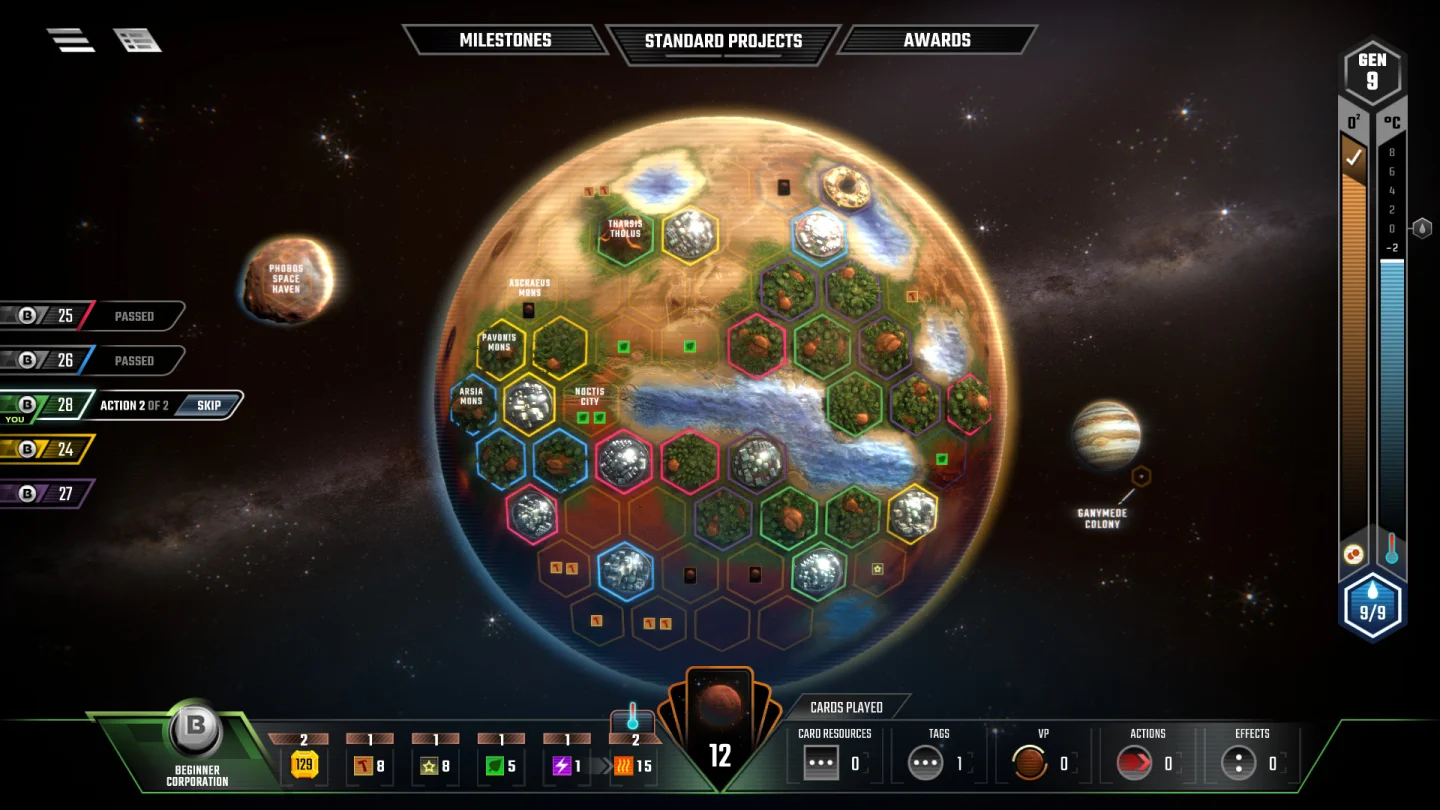
- Watch the global parameters to judge how much game remains.
- Consider milestones and board placement alongside card combinations.