
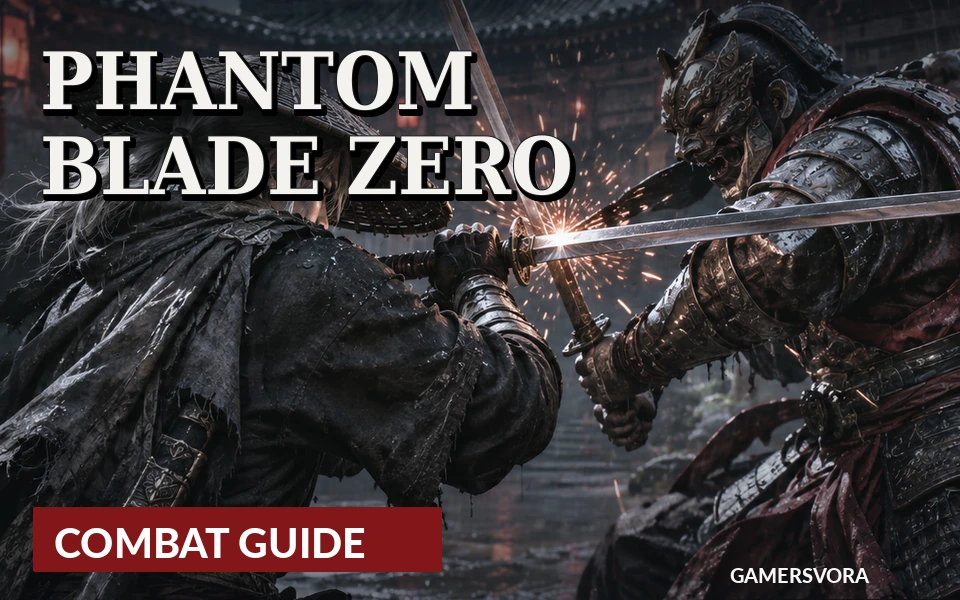
Learn how Sha-Chi works in Phantom Blade Zero, when to parry or dodge, how to use powerful combos, and how to break enemy guards without leaving Soul vulnerable.
Introduction
A fight in Phantom Blade Zero can turn against you even when you appear to be winning. You might land several clean hits, push an enemy backwards and prepare another heavy attack, only to discover that you’ve exhausted the very resource needed to defend yourself.
That resource is Sha-Chi.
S-GAME’s martial-arts action RPG connects attacking, blocking and counterattacking through a shared combat meter. Instead of treating defense as something you do between attacks, Phantom Blade Zero asks you to think about both together.
A properly timed parry can damage an opponent’s guard. A careless block can weaken your own. An aggressive combo might create an opportunity for an execution, but it can also leave you exposed if you spend too much Sha-Chi.
This Phantom Blade Zero Sha-Chi guide explains how those decisions fit together, including parries, perfect dodges, combo attacks, weapon switching and the techniques that make difficult encounters more manageable.
Phantom Blade Zero Combat at a Glance
| Detail | Information |
|---|---|
| Game | Phantom Blade Zero |
| Developer | S-GAME Studio |
| Publisher | S-GAME Publishing |
| Release Date | October 29, 2026 (October 28 in the US and select regions) |
| Platforms | PlayStation 5 and PC |
| Genre | Action RPG, Martial Arts, Dark Wuxia |
| Game Mode | Single-player |
| Main Combat Resource | Sha-Chi |
| Main Defensive Mechanics | Guard, Parry, Dodge and Ghoststep |
| Main Combat Features | Standard Combos, Sha-Chi Combos, Power Surge and Phantom Edges |
| Difficulty Options | Wayfarer, Hellwalker and Sixty-Six Days, among the available options |
| Official Website | https://pbz.s-game.com/en-US/ |
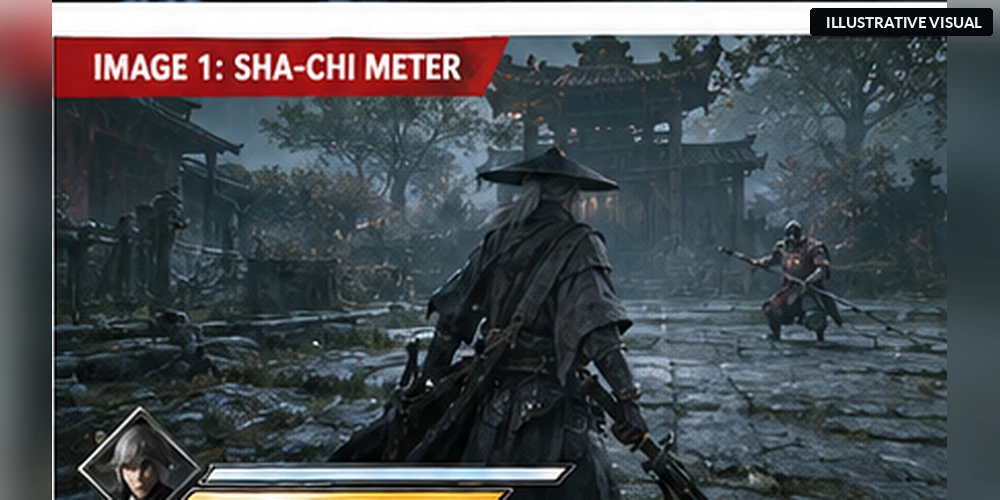
What Is Sha-Chi in Phantom Blade Zero?
Sha-Chi determines how much punishment Soul can withstand and how freely he can use his stronger attacks.
Your character has a Sha-Chi meter, but enemies possess their own version of the same resource. Both sides are trying to weaken the other’s defenses while keeping enough energy available to respond.
The important distinction is how different actions affect that meter.
Standard attacks allow Soul to maintain offensive pressure without the same Sha-Chi expenditure associated with heavy attacks. Stronger Sha-Chi attacks consume the resource, while blocking incoming strikes also reduces what remains.
This creates an interesting problem during longer encounters.
Imagine spending most of your Sha-Chi on a heavy combination against a boss. The boss survives and immediately begins another attack sequence. If you attempt to absorb everything through guarding, your remaining meter may disappear before the sequence ends.
Once Soul’s Sha-Chi is depleted, his guard can break, leaving him exposed to additional damage.
I think this is the most important concept to understand before learning complicated combos: Sha-Chi is not simply energy for stronger attacks. It is also your defensive reserve.
Managing it well means knowing when to spend it, when to preserve it and when to recover it through the game’s weapon-switching system.
How to Parry Attacks in Phantom Blade Zero
Parrying is one of Soul’s most valuable defensive techniques because a successful deflection protects him while weakening the attacker.
On the default PlayStation 5 layout, L1 handles guarding and parrying.
Hold L1 to enter Guard Stance, or time the input immediately before an incoming strike connects to perform a parry.
That distinction matters because guarding and parrying have different consequences.
Guarding Is Safer, but It Consumes Sha-Chi
Holding Guard Stance allows Soul to protect himself from ordinary blockable attacks.
However, remaining in that stance drains Sha-Chi, and absorbing incoming blows costs additional energy.
Guarding is useful when you’re still studying an enemy’s unfamiliar combination. It becomes less effective when used continuously against aggressive opponents.
A boss that attacks repeatedly can drain your meter without giving you enough room to counterattack.
A Successful Parry Weakens the Opponent
A correctly timed parry avoids that defensive Sha-Chi cost and reduces the attacker’s own Sha-Chi.
This creates a direct offensive advantage.
Instead of merely surviving an attack, you’re pushing the enemy closer to a guard break.
Practical tip: Watch the enemy’s weapon movement rather than pressing the parry button as soon as an animation begins. Some attacks include delayed windups, so reacting too early can turn a potential parry into an ordinary block.
For unfamiliar opponents, begin with their slower attacks. Once you’ve identified the timing, move on to longer sequences.
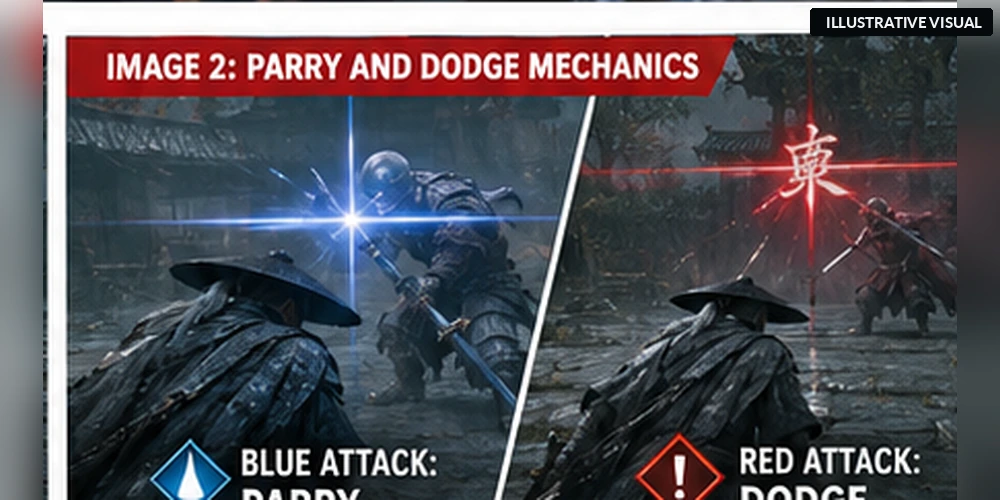
Parry Blue Attacks, Dodge Red Attacks
Phantom Blade Zero uses visual warnings to communicate important differences between incoming attacks.
Recognizing those warnings is essential because some attacks cannot be stopped through conventional guarding.
| Attack Type | Recommended Response | Why It Matters |
|---|---|---|
| Ordinary blockable strike | Guard or timed parry | A parry preserves Sha-Chi and damages enemy guard |
| Blue-flash attack | Timed parry | Blocking can consume substantial Sha-Chi; a precise response is more rewarding |
| Red-flash attack | Dodge | These attacks bypass conventional blocking and parrying |
Blue Attacks Reward Precise Deflection
Blue-flash attacks are dangerous to block passively.
Attempting to withstand one with Guard Stance can consume a considerable portion of your Sha-Chi.
A properly timed parry is the stronger response. With sufficiently precise timing, Soul can also activate Ghoststep, moving behind the attacker.
That gives you an opportunity to respond while the enemy is recovering.
Red Attacks Require Movement
Red-flash attacks demand a different approach.
Trying to parry these attacks is a common mistake because their visual warning appears during the same fast-paced exchanges as ordinary strikes.
Instead, use the dodge command.
On PlayStation 5, the default dodge input is R1. On PC, the default keyboard input is Left Shift.
A well-timed dodge avoids the incoming attack, while especially precise timing can activate Ghoststep.
The challenge is avoiding the temptation to dodge immediately after seeing red. Watch the actual movement of the attacker and respond as the strike approaches.
Perfect Dodge and Ghoststep Explained
Dodging does more than create distance between Soul and his opponent.
Phantom Blade Zero also rewards precise defensive timing through Ghoststep.
A perfectly timed response to certain dangerous attacks can move Soul behind the enemy, changing his position without requiring a lengthy retreat.
From there, Soul can counterattack before the opponent fully recovers.
This is particularly useful against enemies that defend effectively from the front.
However, Ghoststep should not be treated as a guarantee of a long damage window. Different enemies recover at different speeds, and committing to a lengthy combination after every successful defensive move can still be dangerous.
My recommendation is to begin with one or two reliable counterattacks.
As you learn how long an opponent remains vulnerable, you can gradually introduce heavier combinations.
Standard Combos vs Sha-Chi Combos
Phantom Blade Zero separates ordinary offensive combinations from stronger sequences that consume Sha-Chi.
The default PlayStation controls use Square for standard attacks and Triangle for heavier Sha-Chi attacks.
These two attack types serve different purposes.
Standard Combos Maintain Pressure
Standard attacks are useful when you need to continue damaging an enemy without spending your defensive resource on a heavy sequence.
They also reduce enemy Sha-Chi.
This means even ordinary attacks contribute to breaking the opponent’s guard.
Their real strength becomes apparent during difficult encounters. A short standard combination can keep the enemy occupied while allowing Soul to retain Sha-Chi for the next defensive exchange.
Sha-Chi Combos Break Guards Faster
Sha-Chi Combos incorporate stronger attacks that consume the meter.
They can apply heavier pressure to an enemy’s defenses, making them useful when an opponent is close to losing their guard.
However, attacking with them indiscriminately can create the same problem as excessive guarding: an empty Sha-Chi meter.
The better approach is to use standard attacks to establish pressure, then commit to stronger attacks when an enemy is recovering, staggered or approaching a guard break.
Four Early Sha-Chi Combo Inputs on PC
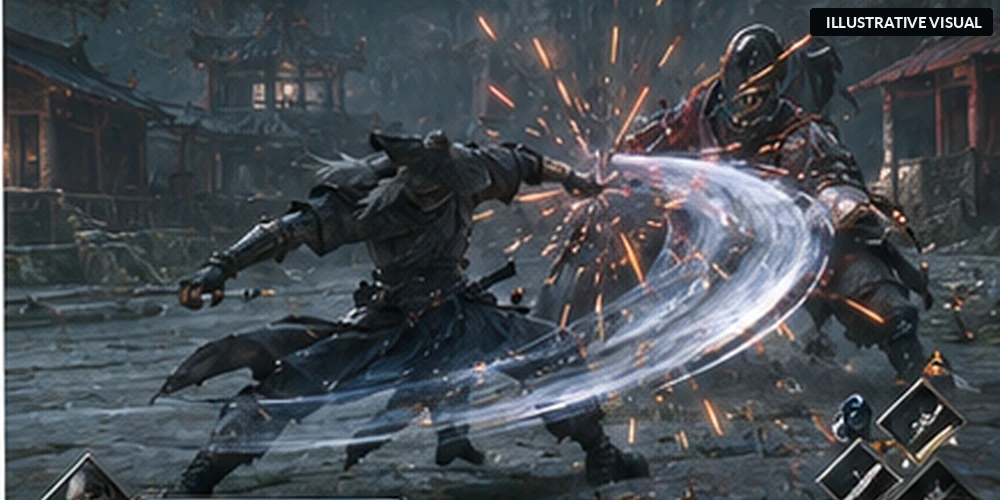
During the opening combat tutorial, the game introduces several Sha-Chi Combo patterns.
With the default PC keyboard-and-mouse bindings, the tutorial presents these sequences:
| Combo | Default PC Input |
|---|---|
| Combo 1 | F → F → F |
| Combo 2 | Left Mouse → F → F |
| Combo 3 | Left Mouse → Left Mouse → F → F |
| Combo 4 | Left Mouse → Left Mouse → Left Mouse → F → F |
Here, Left Mouse represents a standard attack and F represents a Sha-Chi attack.
These are introductory examples, not a universal moveset for every weapon. Different weapons have their own techniques and attack strings, so check the available combinations for your currently equipped weapon.
Why Switching Weapons Is Essential for Sha-Chi Management
One of Phantom Blade Zero’s most useful combat mechanics is the ability to restore Sha-Chi by switching between equipped main weapons.
Soul can carry two main weapons in his active loadout.
On the default PlayStation layout, pressing Left on the D-pad swaps between them.
This action replenishes Sha-Chi, allowing Soul to continue fighting without relying entirely on passive defensive play. Switching is subject to a cooldown, so it cannot be used continuously without restriction.
The strategic value becomes clear during aggressive encounters.
You can spend Sha-Chi using one weapon, switch to your second weapon when the meter runs low and continue applying pressure with a refreshed resource pool.
This also encourages experimenting with different weapons rather than depending exclusively on one familiar moveset.
S-GAME has built a large weapon roster with different combinations, techniques and special properties. Learning a dependable short combo for each equipped weapon makes switching considerably more useful.
For a broader explanation of the game’s weapons, setting and progression, read our Phantom Blade Zero game overview.
Sha-Chi Essence and Power Surge Are Different
Sha-Chi Essence should not be confused with the regular Sha-Chi meter.
While ordinary Sha-Chi supports guarding and heavier combinations, Essence enables a separate offensive technique called Power Surge.
Soul builds Sha-Chi Essence through combat actions, including successful attacks and precise defensive responses.
Once sufficient Essence is available, Power Surge can unleash a powerful attack associated with the equipped main weapon.
The default PlayStation input is L2.
Power Surge is especially valuable when you need to interrupt an opponent’s attack or create an opening that ordinary strikes cannot easily provide.
There is a meaningful difference between using the ability immediately and saving it for a more dangerous moment.
Against regular enemies, spending Essence aggressively may help finish an encounter quickly.
During a boss fight, retaining a Power Surge for an important opening can offer more tactical value.
Phantom Edges add another layer. These secondary weapons provide specialized attacks and abilities, but their limited-use nature means they should be treated as additional combat tools rather than replacements for effective Sha-Chi management.
How to Break Enemy Guards and Trigger Executions
Every enemy’s Sha-Chi meter represents an opportunity.
Reduce that resource enough and the opponent can become Guard-Broken.
A guard-broken enemy temporarily loses the ability to defend normally, creating an opening for stronger attacks.
Standard attacks contribute to reducing the meter, while Sha-Chi Combos and successful parries can accelerate the process.
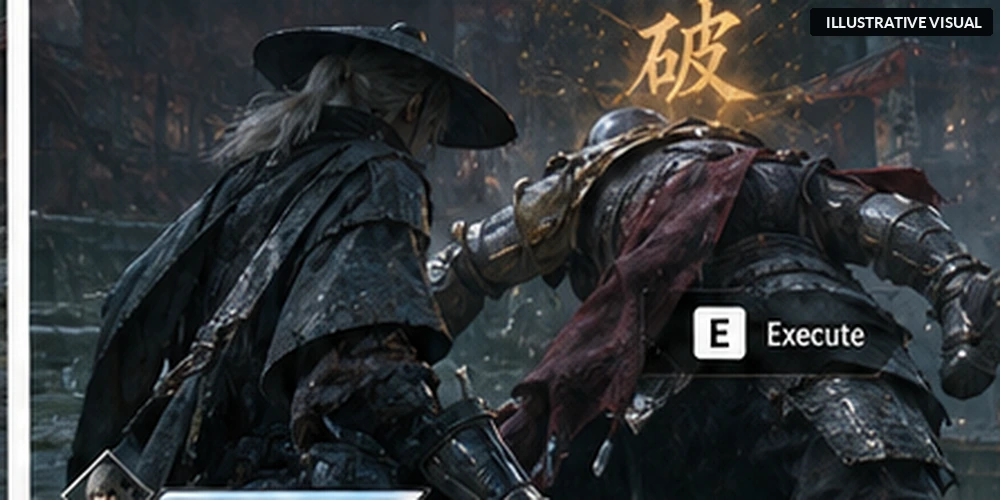
Once an eligible enemy reaches the necessary execution condition, an on-screen prompt allows Soul to perform a finishing attack.
On the default PC controls, the execution input is E.
Not every guard break produces an immediate execution prompt, so continue watching the enemy’s condition rather than assuming the finisher will always become available instantly.
The useful lesson here is that reducing Sha-Chi and reducing health are connected but separate objectives.
An opponent with substantial health remaining can still become temporarily vulnerable if their guard is broken.
That makes sustained, controlled pressure more valuable than simply chasing the largest possible damage number.
A Practical Combat Routine for Difficult Enemies
A dependable approach to combat is to treat each exchange as a sequence of decisions rather than an opportunity to press as many attacks as possible.
- Observe the opening attack. Identify whether the enemy uses ordinary strikes, blue-flash attacks or red-flash attacks.
- Respond with the appropriate defense. Parry attacks you recognize, dodge unblockable attacks and avoid holding Guard Stance unnecessarily.
- Counter with a short combination. Begin with standard attacks while learning how quickly the enemy recovers.
- Spend Sha-Chi at a useful moment. Introduce stronger combos when the enemy is vulnerable or close to a guard break.
- Switch weapons before losing your defensive options. Restore Sha-Chi and continue fighting with your second main weapon when the opportunity allows.
This routine isn’t intended to replace experimentation. Different weapons, enemies and bosses may demand different approaches.
It provides a foundation that prevents a common problem: winning the first few seconds of an encounter through aggression, then losing because Soul has no Sha-Chi left to defend.
Common Combat Mistakes to Avoid
Holding Guard Stance for too long: Blocking several attacks can leave Soul without sufficient Sha-Chi for the counterattack or the next enemy combination.
Parrying red-flash attacks: These attacks require dodging. Trying to block them can lead directly to taking damage.
Using long combos against unfamiliar bosses: A visually impressive combination is not necessarily a safe one. Shorter attacks are easier to stop when an opponent changes direction or begins another move.
Ignoring weapon switching: Remaining on one weapon throughout an encounter means overlooking an important way to replenish Sha-Chi.
Spending Power Surge without considering timing: A powerful move is more useful when it connects or interrupts a dangerous attack than when an enemy can simply move away.
Which Difficulty Should You Use to Learn Combat?
Phantom Blade Zero offers multiple difficulty options for players with different levels of action-game experience.
Wayfarer emphasizes a more approachable, story-oriented experience, while Hellwalker provides a substantially greater combat challenge through more advanced enemy behavior.
Sixty-Six Days introduces an additional demanding option for experienced players.
If your main objective is to understand parry timing, weapon switching and Sha-Chi management, starting on a more manageable difficulty makes sense.
Learning an enemy’s visual warnings is easier when every missed response doesn’t immediately threaten the entire encounter.
Experienced players may prefer tougher settings, particularly if they enjoy mastering difficult boss patterns.
Anyone familiar with precision-based sword combat should also explore our Onimusha: Way of the Sword review, which discusses how another action game uses defensive timing and counterattacks.
Final Editorial Thoughts
What makes Phantom Blade Zero’s combat interesting to me isn’t simply the speed of its swordplay.
It’s the relationship between decisions that initially appear separate.
A successful parry weakens an enemy. A heavy combo spends the same energy that could have protected Soul. A weapon switch creates another chance to attack. A precise dodge can turn an apparently dangerous moment into an opportunity.
Those mechanics encourage a style of fighting where aggression works best when it is controlled.
The most useful habit to develop is not memorizing the longest combination available. It’s learning to recognize when an enemy has given you permission to attack—and when continuing that attack would be a mistake.
Once that rhythm becomes familiar, Sha-Chi stops feeling like a restriction and becomes the resource around which every encounter is organized.
Frequently Asked Questions
What is Sha-Chi in Phantom Blade Zero?
Sha-Chi is a combat resource used for guarding and stronger attacks. Enemies also possess Sha-Chi meters, which can be depleted to break their defenses.
How do you parry in Phantom Blade Zero?
Press the guard/parry input shortly before a blockable enemy attack connects. The default PlayStation input is L1, while the default PC keyboard-and-mouse input is Right Mouse.
Can you parry red attacks?
Red-flash attacks cannot be stopped through conventional guarding or parrying. Use dodge instead, timing your movement close to the moment of impact.
What is Ghoststep?
Ghoststep is a special repositioning response that can occur after exceptionally well-timed defensive actions. It moves Soul behind an opponent and creates an opportunity to counterattack.
How do you restore Sha-Chi?
Switching between two equipped main weapons replenishes Sha-Chi. The mechanic has a cooldown, so weapon swaps must be timed rather than repeatedly spammed.
What is the difference between Sha-Chi and Sha-Chi Essence?
Sha-Chi supports defensive actions and powerful attack combinations. Sha-Chi Essence is a separate resource used to activate Power Surge attacks.
How do you break an enemy’s guard?
Reduce the opponent’s Sha-Chi through successful attacks, heavier combos and parries. Emptying the enemy’s meter can leave them Guard-Broken and vulnerable to follow-up damage.
Is Phantom Blade Zero multiplayer?
No. Phantom Blade Zero is designed as a single-player action RPG experience. Its combat and progression systems are designed around Soul’s individual journey.
Trusted Source Links
1. S-GAME — Official Phantom Blade Zero Website
2. PlayStation Blog — How Boss Weapons Transform Combat and Exploration (October 28, 2026)
3. PlayStation Blog — State of Play Combat and Wulin Deep Dive (August 17, 2026)
4. Steam — Official Phantom Blade Zero Store Page
https://store.steampowered.com/app/4115450/Phantom_Blade_Zero
5. PlayStation — Official Phantom Blade Zero Game Page
https://www.playstation.com/en-us/games/phantom-blade-zero
6. All Things How — Sha-Chi Combos, PC Inputs and Combat Tutorials
7. All Things How — Parry Timing and Blue/Red Attack Mechanics

Sign in to Comment
Join the Gamersvora community
Create a free account or sign in to comment and reply. This keeps conversations safer and reduces spam.