
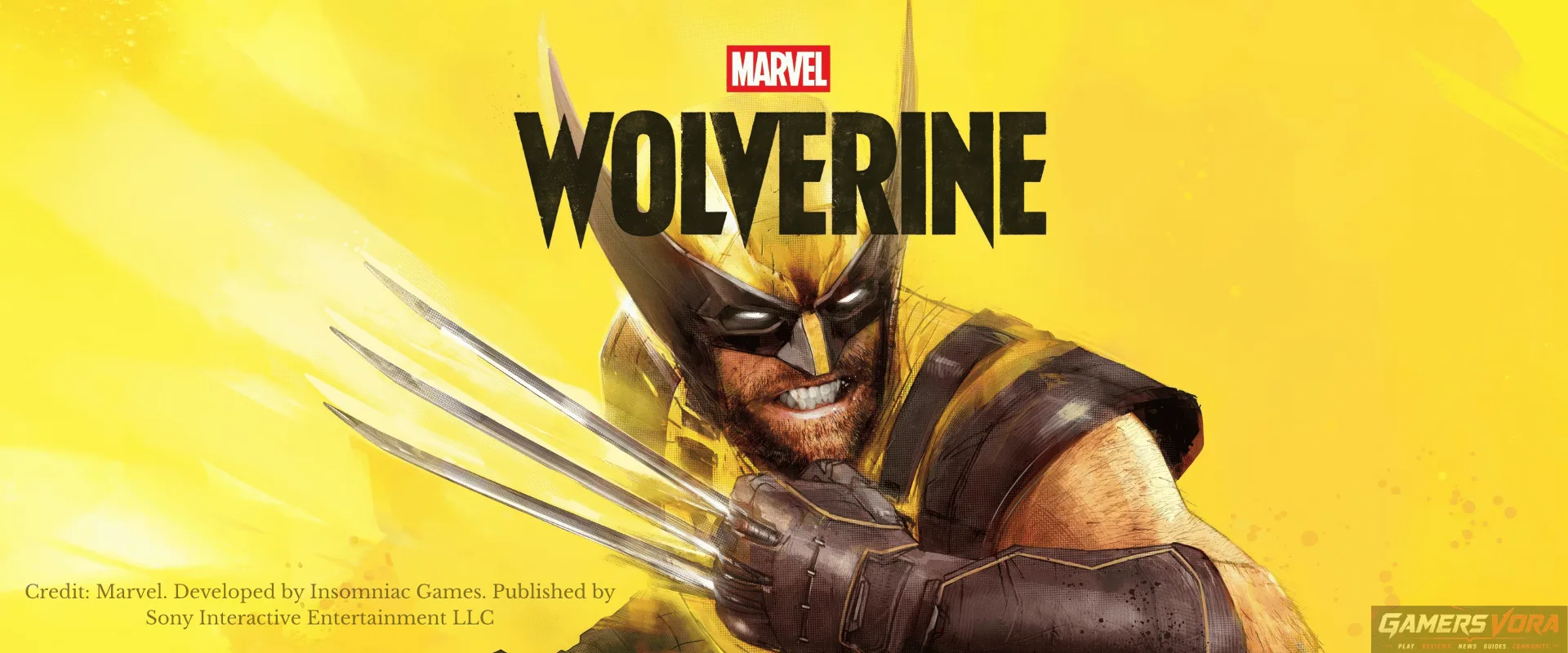

Wolverine has never been the kind of superhero who solves every problem cleanly. His claws, healing ability and short temper naturally point toward a very different kind of action game from the acrobatic superhero adventures Insomniac Games has become known for.
That difference is at the center of Marvel’s Wolverine.
Rather than placing Logan inside another enormous superhero sandbox, Insomniac built a more focused, narrative-driven action-adventure around close-range fighting, aggression, mutant abilities and a journey that moves through several parts of the world.
Marvel’s Wolverine launched on September 15, 2026 for PlayStation 5, bringing Insomniac’s interpretation of James “Logan” Howlett into the same broader Marvel universe as its Spider-Man games while giving him a noticeably different style of game.
Marvel’s Wolverine at a Glance
| Detail | Information |
|---|---|
| Game | Marvel’s Wolverine |
| Developer | Insomniac Games |
| Publisher | Sony Interactive Entertainment |
| Collaboration | Marvel Games |
| Release Date | September 15, 2026 |
| Status | Released |
| Platform | PlayStation 5 |
| Genre | Third-person action-adventure |
| Game Structure | Narrative-driven, not open world |
| Players | Single-player |
| PS5 Pro | Enhanced |
| Main Character | James “Logan” Howlett / Wolverine |
A More Focused Game Than Marvel’s Spider-Man
Anyone coming directly from Marvel’s Spider-Man should understand one major difference immediately: Marvel’s Wolverine is not an open-world game.
Insomniac instead sends Logan through a series of locations connected to the story. That structure fits the character surprisingly well. Spider-Man is closely associated with moving freely across New York, while Wolverine’s stories often involve military operations, remote locations, secret facilities, bars, criminal territories and journeys into his own complicated past.
The result is a game that can change environments without requiring every location to become another giant map filled with icons.
Logan’s journey includes places such as Madripoor and Japan, while other environments reflect the international nature of the story. Insomniac also carried out real-world location research, including scanning environments in Japan, to help build convincing materials, architecture and natural spaces.
This globe-spanning approach gives Wolverine room to feel different from Insomniac’s Spider-Man series while still benefiting from the studio’s experience with cinematic superhero games.
The Story Puts Mutant Survival at the Center
Marvel’s Wolverine tells an original Logan story rather than directly adapting one comic storyline or movie.
Mutants exist in a particularly dangerous position in this version of the Marvel universe. They do not yet have the kind of established protection or organized presence that fans may expect from later X-Men stories.
One of the central threats comes from Bolivar Trask, whose actions against mutants drive Logan and his allies into conflict.
The story also involves Team X, linking Wolverine with characters who have complicated histories of their own. Mystique and Sabretooth are among the figures connected to this part of Logan’s life, while Jean Grey becomes another major part of the wider story.
Insomniac has also confirmed appearances from enemies and factions including Omega Red, Deathstrike, the Reavers and The Hand.
That gives the game a useful mix of personal conflict and a larger threat against mutantkind. Wolverine is not simply travelling from one villain encounter to another. His relationships, missing memories and uncertainty about parts of his past are closely tied to what is happening around him.
The game does not require players to know decades of Wolverine comic history beforehand. It uses familiar characters and ideas while building its own version of Logan.
Combat Is Designed Around Staying on the Attack
Wolverine’s claws may be the obvious attraction, but his combat system has more going on than repeated slashing attacks.
The fundamental idea is aggressive momentum.
Logan can quickly close distance, launch himself toward enemies and continue applying pressure instead of constantly backing away. Claws, kicks, parries, barrages and heavier attacks can be combined depending on the situation.
This gives Wolverine a physical presence that is deliberately unlike Spider-Man. He is heavier, less graceful and far more comfortable fighting at extremely close range.
Players can unlock Techniques that expand his combat options, alongside rechargeable Special Techniques. Four Special Techniques can be equipped at the same time, allowing players to shape their active combat setup.
Examples include attacks designed to control groups, interrupt opponents or rapidly close space between Logan and his target.
That customization does not transform Wolverine into a traditional role-playing game, but it gives the combat system enough flexibility to develop beyond the moves available near the beginning.
Rage Changes More Than Wolverine’s Damage
One of the more important systems is Logan’s Rage meter.
Rage develops through three tiers as combat continues. Moving through those tiers improves Wolverine’s effectiveness and gradually pushes his fighting style toward a more dangerous state.
It also connects directly with his famous regenerative ability.
Once the appropriate Rage state is available, Last Stand can use Logan’s stored Rage to activate his healing factor when he would otherwise be defeated.
At the highest Rage tier, Wolverine becomes substantially more dangerous and gains access to stronger attacks and critical strikes.
This creates an interesting relationship between offense and survival. Staying aggressive is not merely about finishing enemies faster; successful combat can also contribute to the resources that help Logan survive when a battle turns against him.
Some enemies and situations can interfere with his mutant abilities as well. Ability-inhibiting technology can temporarily remove advantages such as healing, forcing Logan to rely more heavily on his basic fighting skills until the threat is dealt with.
Adaptations Add Another Layer of Progression
Techniques are not the only form of progression.
Players can also unlock Adaptations, which modify Logan’s broader capabilities.
These upgrades can affect areas such as health, Rage effectiveness, defensive timing and other parts of combat. There are numerous Adaptations available, allowing progression to influence how Wolverine behaves rather than simply increasing one damage number.
Equipment and exploration also contribute to progression.
Different suits and claw designs can be discovered or created, drawing inspiration from multiple versions of Wolverine across Marvel history. The selection ranges from recognizable costumes to more grounded civilian-style appearances.
These cosmetics are more than an excuse to reference famous Wolverine designs. Exploring environments for materials feeds into the wider customization system and gives players reasons to investigate areas beyond the main route.
Enhanced Senses Give Exploration a Wolverine Identity
Logan’s mutant abilities matter outside combat too.
His Enhanced Senses can identify useful information in the environment, track people and uncover things that might otherwise be missed.
Exploration can lead to upgrade materials, collectible whisky bottles and optional discoveries connected to Logan’s past.
There are also Nightmare Doors, which lead into special challenges known as Nightmare Trials. These sequences can combine traversal and combat objectives while revealing fragments connected with Wolverine’s memories.
That matters because Marvel’s Wolverine is not trying to compensate for its lack of an open world by pretending to be one.
Instead, optional activities are worked into its smaller environments. Players still have reasons to look around, but the game remains tied to its narrative-driven structure.
Wolverine’s Violence Is Deliberate — but Adjustable
Insomniac did not soften Wolverine into a Spider-Man-style fighter.
Combat includes blood, injuries, dismemberment and other graphic details associated with the character’s claws and healing abilities.
At the same time, the game provides settings that allow players to reduce elements of graphic violence. Language filtering is also available.
Those choices sit within a much larger accessibility suite.
Marvel’s Wolverine includes accessibility support covering visual, auditory, cognitive and motor needs, building on systems Insomniac previously developed for its other PlayStation titles.
Features include options such as high-contrast visuals, audio description, game-speed adjustments and stronger haptic feedback cues.
The important point is that the game’s violent identity does not require every player to experience its most graphic presentation.
PS5 and PS5 Pro Features
Marvel’s Wolverine was developed specifically for the PlayStation 5 generation and is not available on PS4.
The game supports DualSense controller features including haptic feedback and adaptive triggers, while the PS5 hardware is also used for fast loading and 3D audio support.
It is additionally marked as PS5 Pro Enhanced, with support for PlayStation Spectral Super Resolution on PS5 Pro.
These features fit a game where physical impact plays such an important role. Controller feedback, environmental destruction and close-range combat can contribute to the sense that Logan is physically colliding with enemies rather than simply reducing health bars from a distance.
As of September 2026, no PC version has been officially announced.
Standard and Digital Deluxe Editions
Marvel’s Wolverine is available in Standard and Digital Deluxe editions.
The base game contains suits and claw variants that can be earned through normal progression.
The Digital Deluxe Edition adds a separate group of exclusive cosmetic suits, additional claw appearances and extra Technique Points.
Players with the Standard Edition can also purchase the Digital Deluxe content as an upgrade.
The additional suits and claws mainly provide customization rather than changing the core storyline, so the Standard Edition still contains the main Marvel’s Wolverine experience.
What to Do After Finishing the Main Story
Marvel’s Wolverine includes several features designed for players who want to continue after completing the main campaign.
New Game Plus allows another playthrough with additional progression possibilities, while Mission Replay makes it possible to return to specific parts of the story.
Nightmare Challenges provide another reason to revisit Wolverine’s combat and movement systems, and Photo Mode gives players tools for capturing scenes throughout the game.
Together, these additions make the game less dependent on a giant open world for replay value.
What Makes Marvel’s Wolverine Different
The most interesting thing about Marvel’s Wolverine may be what Insomniac chose not to repeat.
This is not Spider-Man with claws.
Movement is different. Combat is closer. The world structure is more focused. Violence is far more explicit. Logan’s healing, Rage and heightened senses influence both fighting and exploration.
Even the emotional direction changes.
Wolverine is enormously powerful, but his story is also built around memory, anger, relationships and the question of what remains underneath all that violence.
That combination gives Insomniac room to use what it has learned from superhero games without forcing Wolverine into a formula created for another character.
For players trying to understand exactly what Marvel’s Wolverine offers, the simplest description is a single-player, story-driven action-adventure centered on close-range combat, character progression, mutant abilities and a globe-spanning Logan story.
It may exist alongside Insomniac’s other Marvel games, but everything from its combat system to its structure has been shaped around Wolverine himself.


Sign in to Comment
Join the Gamersvora community
Create a free account or sign in to comment and reply. This keeps conversations safer and reduces spam.