
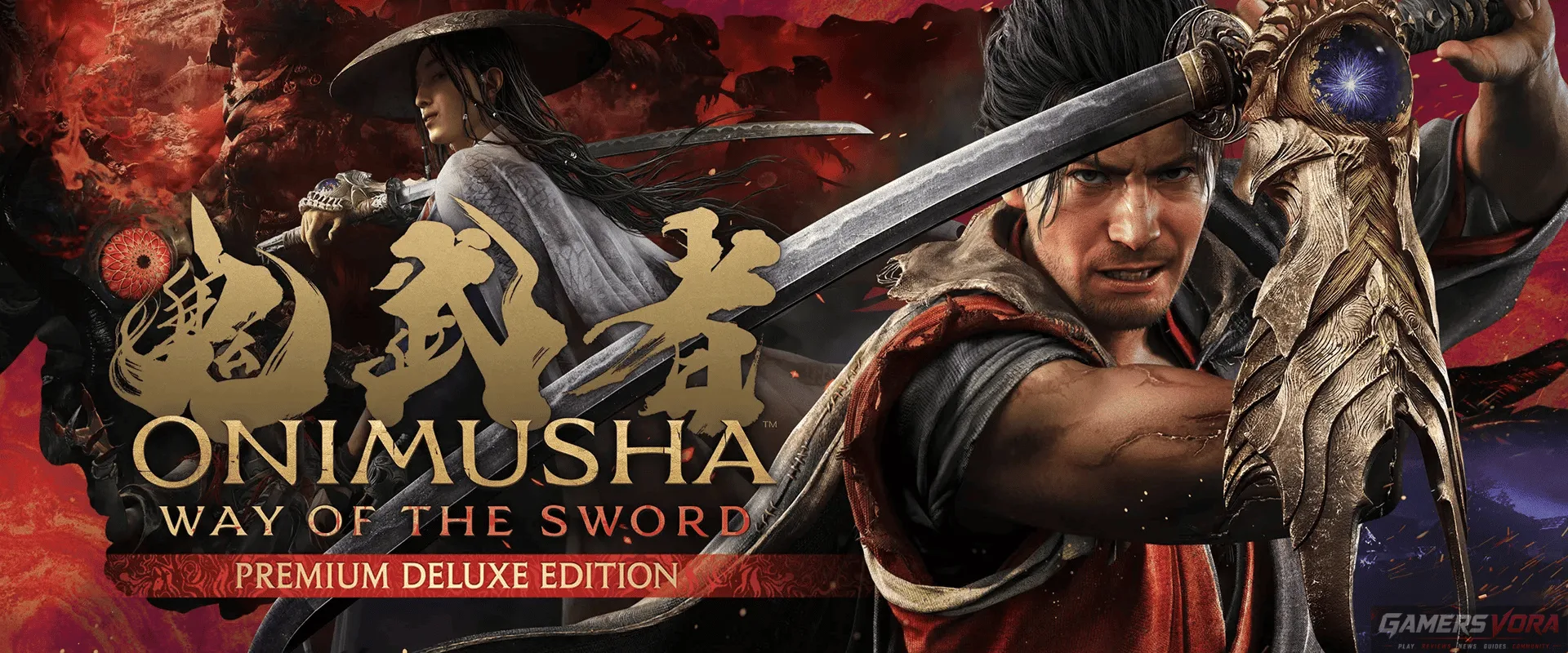
Twenty years is enough time for a series to lose its place.
Games changed while Onimusha was away. Action combat became faster and more technical. Dark Souls rewrote expectations around difficulty. Sekiro made precisely timed sword clashes feel almost conversational. Open worlds got bigger, progression systems got busier, and parrying somehow ended up everywhere.
That left Capcom with a difficult question when bringing Onimusha back: what should this series actually be in 2026?
Onimusha: Way of the Sword provides a surprisingly confident answer.
It doesn’t try to turn Onimusha into a giant open-world samurai RPG, nor does it simply reconstruct the PlayStation 2 games with expensive graphics. Instead, Capcom puts much of its attention where it matters most: a sword fight between Miyamoto Musashi and something that badly wants him dead.
That’s where this revival looks strongest.
The complications arrive when the sword goes back into its sheath.
Onimusha Is Back — And Players Clearly Noticed
Onimusha: Way of the Sword launched on September 4, 2026 for PS5, Xbox Series X|S, Nintendo Switch 2 and PC.
It was the first completely new entry in the series in roughly two decades, making the size of its initial audience particularly notable.
Capcom announced that Way of the Sword sold more than one million copies worldwide on its first day, taking lifetime sales for the Onimusha franchise beyond 10 million units.
For a series that had spent so long away from the front line of Capcom’s portfolio, that’s a substantial return.
More importantly, though, Way of the Sword doesn’t seem designed merely to test whether nostalgia can still sell Onimusha.
It has a fairly clear idea of what a modern version of the series should feel like.
This Isn’t Simply Capcom’s Version of Sekiro
Watch a few minutes of combat and the comparison is almost unavoidable.
A swordsman faces dangerous enemies. Attacks have to be read rather than simply absorbed. Parries matter. Timing matters. Aggression without awareness eventually gets punished.
Sekiro will probably enter the conversation.
But stopping there doesn’t explain Way of the Sword particularly well.
Capcom has built several defensive ideas into Musashi’s fighting style rather than asking one universal parry mechanic to carry the entire combat system. Blocking, parrying, deflecting and dodging have different purposes, while the returning Issen technique rewards extremely precise timing with a devastating counterattack.
That distinction changes the feeling of a fight.
Defense isn’t merely downtime between opportunities to attack. Once these systems begin interacting, defending correctly becomes part of Musashi’s offense.
The result is combat that wants you to look increasingly dangerous as you understand it.
A badly handled encounter can be messy: missed timing, desperate movement, enemies controlling the rhythm.
Handle the same kind of fight properly and the picture changes. A strike is read, steel meets steel, an opening appears and Musashi immediately turns that defensive moment into punishment.
That’s a very Onimusha idea.
And it’s one of the reasons the revival appears to have found its own space despite arriving in an era already crowded with parry-heavy action games.
Issen Still Gives Onimusha Its Edge
Among all the returning ideas, Issen may be the most important.
The technique essentially asks the player to respond within a dangerous timing window and rewards success with an exceptionally powerful counter.
There’s an elegant risk/reward decision buried inside that mechanic.
Playing safely may keep Musashi alive. Trying to master Issen asks for considerably more confidence.
That creates exactly the sort of progression an action game benefits from: the character isn’t the only thing becoming stronger. Ideally, the player is becoming more capable too.
Early combat can therefore give an incomplete impression of the system.
Post-launch coverage has noted that Way of the Sword takes time to introduce its full collection of defensive and offensive possibilities. Once those mechanics begin working together, fights become considerably richer than the opening hours might suggest.
That learning curve matters because Onimusha isn’t trying to make every battle difficult simply by turning enemies into damage sponges.
The more interesting challenge is learning how to control a fight.
The Difficulty Has More Teeth Than the Demo Suggested
The pre-release demo created an interesting concern.
Some experienced action players found its enemies relatively passive, raising the possibility that Capcom had made its comeback too forgiving.
The full game appears to answer that criticism.
Enemy combinations become more complicated, attack patterns demand better reactions, and bosses put considerably more pressure on the mechanics introduced earlier. Later fights are much less accommodating of sloppy aggression.
That doesn’t suddenly make Way of the Sword a Soulslike.
Accessibility and difficulty aren’t the same question, either. A game can offer more accommodating options while still building encounters that reward mechanical mastery.
That’s closer to what Capcom seems to be attempting here.
Way of the Sword wants a broad audience to be able to enter Musashi’s story, but it also gives players reasons to become considerably better at its combat.
The important part is that the difficulty serves the swordplay instead of becoming the game’s entire identity.
Boss Fights Are Where The System Has To Prove Itself
Complex combat doesn’t mean much if enemies never demand that you understand it.
Bosses are therefore particularly important in a game like this.
Way of the Sword’s better encounters push pattern recognition, positioning, defensive timing and knowing when not to attack. That last part matters. Good sword combat needs restraint.
The temptation to squeeze in one more strike should occasionally be exactly what gets you hurt.
When the game gets that rhythm right, a boss becomes more than a large health bar. It becomes an examination of everything the combat system has been quietly teaching.
And because Musashi is supposed to be an extraordinary swordsman, victory can eventually look almost effortless even when the player had to work hard to achieve it.
That’s a difficult fantasy for an action game to deliver.
Capcom gets surprisingly close.
Miyamoto Musashi Gives This Onimusha Its Own Face
Capcom could have leaned much harder on familiar protagonists and nostalgia.
Instead, Way of the Sword centers its story on a fictionalized Miyamoto Musashi.
This isn’t intended as a history lesson.
The real swordsman provides the foundation, while Onimusha does what the series has always been comfortable doing: colliding recognizable Japanese history with demons, supernatural artifacts and fantasy.
Musashi’s visual identity is particularly striking because Capcom uses the likeness of legendary Japanese actor Toshiro Mifune.
It’s more than a neat piece of casting.
Mifune’s association with samurai cinema fits a game so interested in the visual language of dramatic sword fights, and the character gives Capcom a way to establish this revival without simply rebuilding an old Onimusha story.
This Musashi begins from a position of considerable confidence in his own ability. That gives the story somewhere to take him beyond becoming mechanically stronger.
The question isn’t really whether Musashi knows how to use a sword.
He clearly does.
The more interesting question is what kind of man is holding it.
Kyoto Is Gorgeous When It’s Allowed To Be Strange
Way of the Sword takes Musashi into an Edo-period Kyoto distorted by supernatural Malice and occupied by the Genma.
That combination is important.
Remove the supernatural excess and the game risks disappearing into an increasingly busy category of historically inspired samurai adventures. Push completely into fantasy and Onimusha loses the tension created by seeing recognizable history corrupted by something impossible.
Capcom sits between the two.
Temples and streets can feel grounded one moment before grotesque creatures and supernatural spaces tear through that sense of normality.
The RE Engine also gives the revival the visual fidelity expected from modern Capcom, particularly in character animation, creature detail and cinematic presentation.
But attractive environments don’t automatically produce interesting exploration.
And that’s where one of Way of the Sword’s more noticeable problems begins.
The Revival Is Less Convincing When It Starts Acting Like A Modern AAA Game
There is an irony at the center of Way of the Sword.
Capcom modernized its combat without losing much of Onimusha’s identity.
Some of its other attempts at modernization aren’t nearly as elegant.
Resource collection, crafting materials, upgrades and optional activities give players more reasons to search through environments. In theory, that adds texture between major encounters.
In practice, those systems can interfere with the game’s best quality: momentum.
When a sword fight is asking for complete attention, Way of the Sword feels focused. Musashi enters an encounter, reads the opposition, adapts and survives.
Going from that intensity to hunting materials isn’t always a welcome change of pace.
It’s particularly noticeable because the combat sets such a high standard.
A mediocre side activity in a mediocre game can disappear into the background.
A mediocre activity sitting between two excellent sword fights is much harder to ignore.
Post-launch coverage has specifically highlighted the material grind as one of the less convincing parts of progression. Some resources can eventually be purchased with red souls, which can reduce the burden, but that doesn’t entirely solve the underlying pacing issue.
More content hasn’t necessarily made Onimusha better.
At times, it has simply given Musashi more chores.
Repetition Can Take Some Of The Edge Off
Ordinary encounters face a similar problem.
Way of the Sword’s mechanics tend to shine when the player can read an opponent and establish a rhythm. Carefully constructed duels make every defensive choice feel meaningful.
Repeated enemy groups can’t always maintain that intensity.
As the adventure continues, familiar encounters and recurring combat situations inevitably lose some of the surprise they had earlier.
That doesn’t make the underlying combat worse.
If anything, it exposes just how good it can be when the encounter design gives it enough room.
The difference between a memorable duel and another group standing between Musashi and his next objective can become substantial.
A more disciplined game might have benefited from trusting its strongest content and cutting some of what sits around it.
What About PC Performance?
This is one area where we need to draw a clear line.
GamersVora has not independently benchmarked Onimusha: Way of the Sword, so we’re not going to present another publication’s frame-rate measurements as our testing.
Independent PC coverage has nevertheless been encouraging on suitably powerful hardware.
PC Gamer, for example, reported strong performance during its review testing on a Radeon RX 9070 XT and Core i5-13600K system, with only brief hitches around some loading and cutscene transitions.
That result should not be interpreted as a guarantee for every PC.
Resolution, GPU, CPU, upscaling configuration and graphics settings all matter, so anyone buying specifically for PC should check benchmarks matching their own hardware rather than relying on a single high-end configuration.
Steam Deck is a different situation.
Independent testing describes the game as playable but much more comfortable around a 30fps target, particularly once demanding environments and combat are involved.
That’s encouraging for portable play, but it’s clearly a compromise compared with capable desktop hardware.
What Way of the Sword Gets Right
The easiest way to understand the success of this revival is to look at what Capcom apparently refused to discard.
Issen still matters.
The Oni Gauntlet still matters.
The Genma still matter.
Historical Japan colliding with supernatural horror still matters.
But none of those things have been preserved as museum pieces.
Combat has been expanded enough to stand beside modern action games without simply borrowing another game’s identity. Musashi gives the revival a recognizable protagonist of its own. Modern production values allow Capcom to push the theatrical quality of sword fights considerably further than the older hardware ever could.
That’s the right kind of modernization.
The frustrating parts are generally where Way of the Sword seems less confident that those strengths are enough.
So, Is Onimusha: Way of the Sword Worth Playing?
For players who care primarily about precise melee combat, parries, counters, boss fights and learning a mechanical system, the evidence is strongly encouraging.
Way of the Sword appears to understand the pleasure of becoming better at a fight rather than merely becoming statistically stronger.
Players expecting a huge open-world samurai RPG should adjust those expectations.
And anyone who dislikes resource collection, upgrade-material hunting or repeated side activities may find some of the modern additions considerably less interesting than the main combat.
There’s also an important distinction for Souls fans.
Way of the Sword may share some mechanical vocabulary with games such as Sekiro, but reducing it to “Capcom’s Soulslike” ignores what makes its combat interesting. This is ultimately trying to make Musashi feel like an increasingly masterful swordsman, not merely a survivor overcoming impossible odds.
That difference gives Onimusha room to breathe.
GamersVora’s Take
Onimusha: Way of the Sword didn’t need to prove that a 2000s franchise could be made prettier.
It needed to prove there was still a reason for Onimusha to exist.
The sword combat makes the strongest argument.
Its layered defensive mechanics, Issen counters and increasingly demanding encounters suggest Capcom found a way to modernize the series without sanding away everything that made it recognizable.
Not every modern addition improves the formula. Resource gathering, progression busywork and repetitive encounters can interfere with the pace, and those weaknesses are particularly visible because the best fights are so focused.
But perhaps the most encouraging thing about Way of the Sword is that its problems don’t appear to come from Onimusha being outdated.
They’re almost the opposite.
When the game becomes distracted by some of modern AAA design’s familiar habits, it loses momentum.
When it trusts Onimusha — a swordsman, a demon, an Oni Gauntlet and a split second in which one perfectly timed response can end a fight — it makes a convincing case that twenty years away was already long enough.
Editorial disclosure: GamersVora has not completed an independent scored playthrough or performance benchmark of Onimusha: Way of the Sword. This article is a research-based post-launch analysis built from verified official information and clearly attributed independent coverage. It is therefore intentionally not presented as a scored GamersVora review.


Sign in to Comment
Join the Gamersvora community
Create a free account or sign in to comment and reply. This keeps conversations safer and reduces spam.