
Published: October 15, 2026 | Category: Gaming News
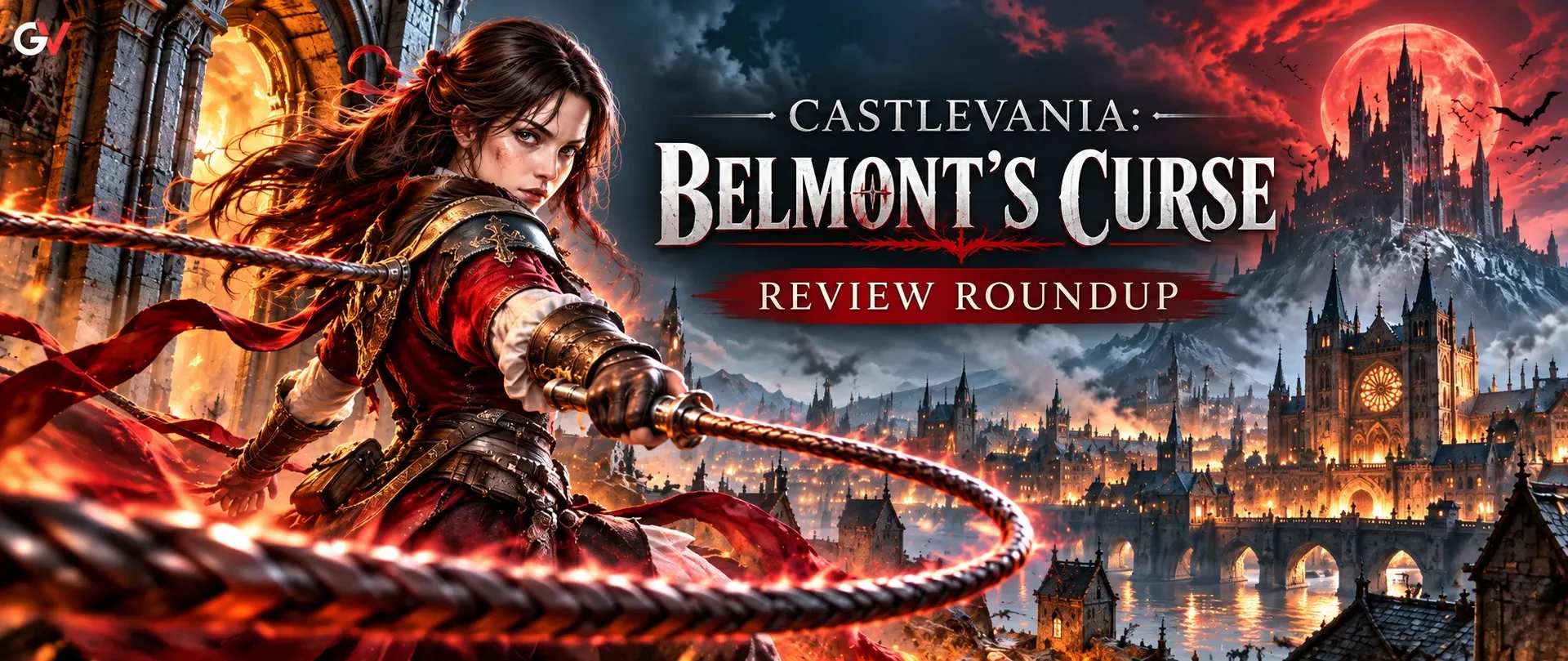
Castlevania: Belmont’s Curse has arrived to a largely positive critical reception, with reviewers praising its gothic environments, demanding combat, and exploration while disagreeing over whether it does enough to distinguish itself from modern Metroidvanias.
The new 2D action-adventure launched on October 15, 2026, for PC, PlayStation 5, Xbox Series X|S, and Nintendo Switch. Developed by Evil Empire with advisory support from Motion Twin and published by Konami, it introduces Rose Belmont as the latest member of the legendary vampire-hunting family.
Reviews began appearing on October 13, two days before the official release. By October 14, the PlayStation 5 version had reached a Metacritic score of 86/100, although scores vary between platforms and may change as further reviews are added.
That is an encouraging start for a franchise returning to side-scrolling action after a long absence. But the individual reviews reveal some important differences in opinion, particularly around controls, difficulty, originality, and performance.
Castlevania: Belmont’s Curse Review Scores
The reception ranges from enthusiastic recommendations to more reserved assessments. Some critics consider Belmont’s Curse an excellent revival of the series, while others see it as an enjoyable adventure that struggles to match the strongest games in its genre.
Here is a selection of published review scores:
| Publication | Review Score |
|---|---|
| GameSpot | 10/10 |
| Game Informer | 9.25/10 |
| IGN | 8/10 |
| GamesRadar+ | 4/5 |
| Push Square | 7/10 |
| Siliconera | 7/10 |
| Video Games Chronicle (VGC) | 3/5 |
The scores suggest broad approval, but they should not be mistaken for identical recommendations. A 10/10 from GameSpot and a 3/5 from VGC reflect notably different assessments of how successfully the new Castlevania builds upon the franchise’s established formula.
The stronger reviews reward its level design, combat flexibility, and atmosphere. The more critical ones question whether its mechanics feel sufficiently fresh in a genre that has evolved considerably during Castlevania’s absence.
What Critics Like About Belmont’s Curse
Exploration and combat give the adventure its strongest moments
Much of the praise centres on how Rose Belmont moves through the game’s interconnected environments.
The Vampire Killer whip plays a major role in traversal, allowing Rose to grapple towards objects, swing across obstacles, and close distances during combat. Alongside that movement system, players can equip different weapons, relics, and magical abilities to approach encounters in several ways.
Game Informer, which awarded the game 9.25/10, particularly enjoyed the variety available during combat. Reviewer Charles Harte also highlighted the incentive to revisit earlier areas after gaining new abilities, reporting a 16-hour playthrough that reached 92% completion.
GamesRadar+ similarly praised the sense of discovery. Its review describes a world where puzzles, hidden routes, and cryptic clues reward players willing to examine their surroundings rather than simply follow objective markers.
For anyone who enjoys filling out a map, finding secret rooms, and gradually expanding their movement abilities, these are promising observations.
The Gothic atmosphere makes a strong impression
Belmont’s Curse takes place in Paris in 1499, approximately 23 years after the events of Castlevania III: Dracula’s Curse.
Rose accompanies her father, Trevor Belmont, into a city overwhelmed by supernatural creatures. The adventure eventually leads into the familiar dangers associated with Dracula’s castle.
The setting gives Evil Empire room to combine recognisable Castlevania imagery with a different environment. Gothic buildings, detailed interiors, and the sight of Paris burning beneath a supernatural invasion feature prominently in the game’s visual presentation.
Even several of the more cautious reviews praised the artwork.
VGC, despite giving the game 3/5, considered its presentation a major strength. Push Square likewise appreciated the detailed backgrounds, animation, and visual variety across different locations.
The disagreement is less about how Belmont’s Curse looks and more about whether the adventure underneath those visuals is equally memorable.
Where Critics Think the Game Falls Short
It may feel too familiar to experienced Metroidvania players
The biggest point of disagreement concerns originality.
Castlevania helped establish the style of interconnected exploration that became known as Metroidvania. But the genre has expanded enormously, and newer releases have introduced their own approaches to navigation, progression, and combat.
VGC argues that Belmont’s Curse largely follows familiar conventions without finding enough opportunities to surprise experienced players.
Push Square raises a similar concern. Its 7/10 review describes a worthwhile adventure with appealing level design but one that does not consistently stand above the competition.
That distinction matters. A traditional Metroidvania structure is not necessarily a weakness, especially when executed well. Someone returning to Castlevania after years away might appreciate the familiar progression.
A player who has recently completed several demanding modern Metroidvanias may expect more substantial mechanical innovation.
Controls, navigation, and boss encounters attract criticism
Another recurring concern involves the feel of moment-to-moment gameplay.
Push Square reports that certain attacks and movement actions can feel slower or less responsive than expected. This becomes particularly noticeable in difficult platforming sequences and fights where precise timing is essential.
GamesRadar+ identifies a different source of frustration: finding some bosses can prove more complicated than defeating them. The review praises the elaborate exploration but notes that limited fast-travel options can make searching the larger map inconvenient.
VGC also criticises the repeated journeys between save rooms and difficult encounters.
There is an important qualification, though. Belmont’s Curse includes adjustable difficulty options, including settings that can make repeated boss attempts less punishing. Players who enjoy exploration but dislike lengthy boss runbacks have some flexibility to modify the experience.
Not every reviewer agreed about these weaknesses, and the differing assessments suggest that individual preferences around movement responsiveness and difficulty will strongly influence enjoyment.
Launch Issues Are Another Reason to Check Your Platform
Beyond differences of opinion about gameplay, Konami has acknowledged several technical problems affecting particular configurations.
In an official notice dated October 14, the publisher identified an issue on Steam and Xbox on PC where the game may fail to launch when V-Sync is disabled and the frame rate is set to unlimited. Konami provided a temporary workaround.
The company also reported some Steam Deck interface elements appearing outside the visible screen area. A separate issue can prevent progress beyond the title screen on certain platforms when particular system languages are selected.
Konami said it was preparing a patch, but the notice did not provide a confirmed release date for the fixes.
Nintendo players should also consider platform-specific performance. Siliconera’s Switch 2 review reported occasional technical difficulties and advised players concerned about performance to consider waiting for improvements.
These problems do not establish that everyone will experience technical trouble. However, checking updated patch notes and reviews for your intended platform is sensible before purchasing.
Is Castlevania: Belmont’s Curse Worth Playing?
Based on the published reviews, Belmont’s Curse looks worth playing for fans of exploration-heavy action games, provided they understand what kind of experience they are buying.
Its strongest appeal is the combination of combat, environmental discovery, and interconnected level design.
The game also provides a new protagonist without abandoning the franchise’s established characters, creatures, and atmosphere. That could make it attractive to long-time followers who want another adventure in the original Castlevania universe.
For newcomers, the decision is more about genre preferences than knowledge of the series.
If you enjoy challenging boss fights, unlocking previously inaccessible areas, and searching for equipment hidden throughout a large map, the critical reception offers plenty of reasons to be interested.
The recommendation becomes less straightforward for anyone who dislikes backtracking, demands extremely responsive movement, or wants every major Metroidvania to introduce an unfamiliar system.
There is also the launch-price consideration. The standard edition is listed at approximately ₹2,333 on the Indian Xbox store, although pricing varies by platform and region. At that price, buyers should weigh their enthusiasm for the genre against the reported technical and design shortcomings.
Who Should Play It and Who Should Wait?
Consider playing now if:
- You enjoy traditional Castlevania adventures and interconnected 2D worlds.
- Finding secrets, acquiring new abilities, and revisiting earlier locations appeal to you.
- You prefer combat that rewards practice and experimentation.
- You are interested in Rose Belmont’s story and the franchise’s returning characters.
Consider waiting if:
- You expect major innovations over established Metroidvania mechanics.
- Frequent backtracking or repeated boss attempts frustrate you.
- You are particularly sensitive to movement responsiveness.
- You plan to play on a platform affected by reported technical issues and want to see post-launch improvements first.
GamersVora’s Take: A Promising Return, but Not an Automatic Purchase
The most interesting aspect of Belmont’s Curse’s reception is not simply its favourable review scores. It is the disagreement over what a returning Castlevania game should accomplish.
Several reviewers see a confident revival that understands what made the franchise influential. Others see a polished example of a formula that has become increasingly common.
Both interpretations can reasonably coexist.
From the available criticism, I would put Belmont’s Curse high on the shortlist for anyone actively looking for a challenging, exploration-focused adventure. Its combat variety, elaborate environments, and secrets appear to be the strongest reasons to play.
I would be more cautious about recommending an immediate purchase to someone who has little attachment to Castlevania or is choosing between several modern Metroidvanias.
The early critical consensus points to a worthwhile return for Castlevania rather than a universally essential release. With the game now available, broader player feedback and Konami’s response to launch issues should help clarify how well that recommendation holds up.
Editorial disclosure: This article is based on published critic reviews, official developer information, and Konami’s technical notices. GamersVora has not independently reviewed or tested Castlevania: Belmont’s Curse.
Trusted Sources
Official information
- Konami — Castlevania: Belmont’s Curse Official Website
- Konami — Known Issues Notice
- Microsoft Xbox India — Castlevania: Belmont’s Curse
Original critic reviews
- Game Informer — Review
- GamesRadar+ — Review
- Push Square — PS5 Review
- VGC — Review
- Siliconera — Review
Additional score verification

Sign in to Comment
Join the Gamersvora community
Create a free account or sign in to comment and reply. This keeps conversations safer and reduces spam.